
Product design
The Suet Ball Feeder
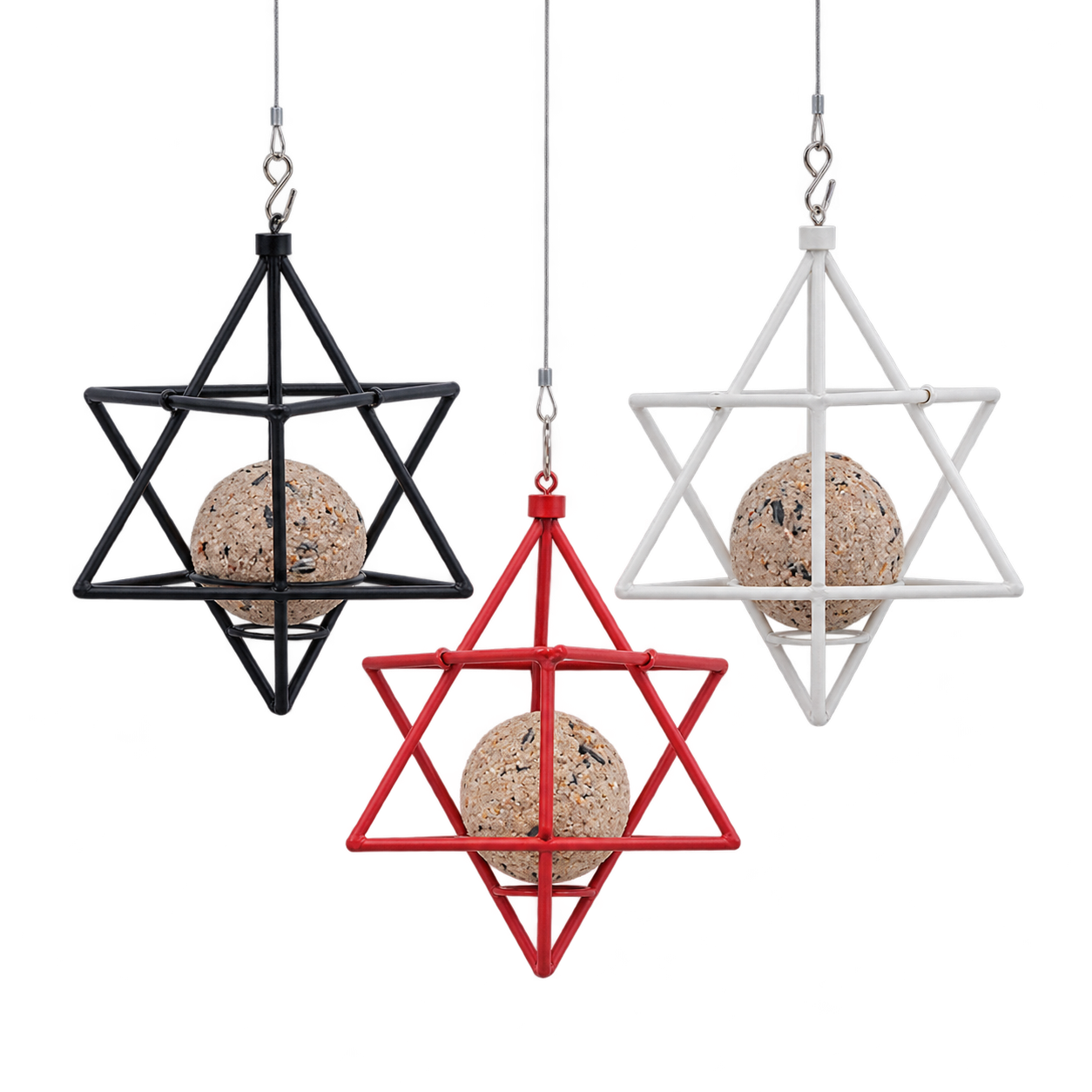
A star-shaped suet ball feeder designed for Wildlife Garden.
- Company
- Wildlife Garden
- Role
- Product Designer
- Scope
- Concept sketching, 3D prototyping and technical drawings
I worked with Wildlife Garden to design a gift that would fit its range of home and garden products. The result was a hanging star that doubles as a suet ball feeder.
The challenge
Small birds need extra energy in winter, and suet balls are an easy way to feed them. The plastic nets they came in looked out of place in the garden. I wanted to give people a feeder they would enjoy hanging up and birds could use safely.
The solution
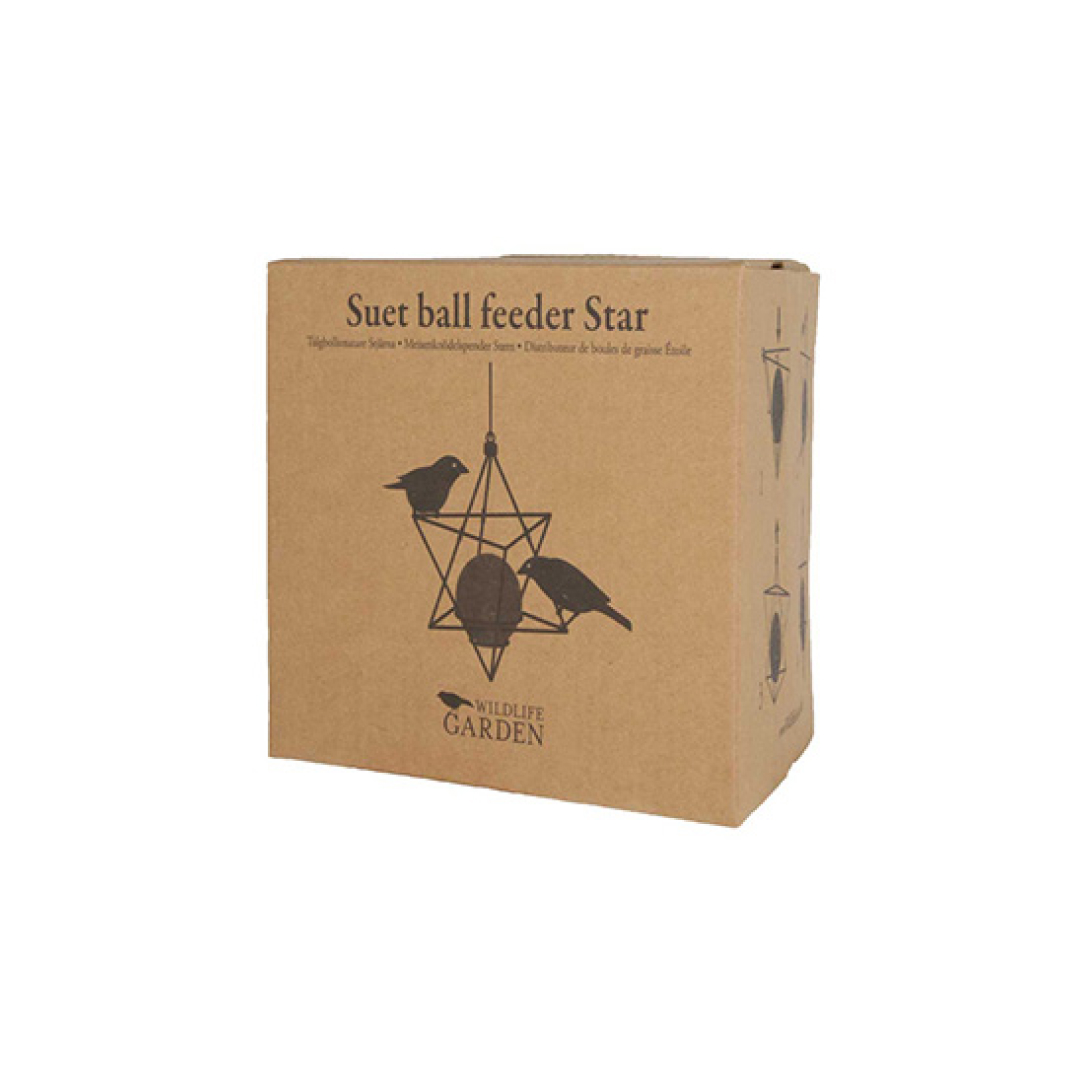
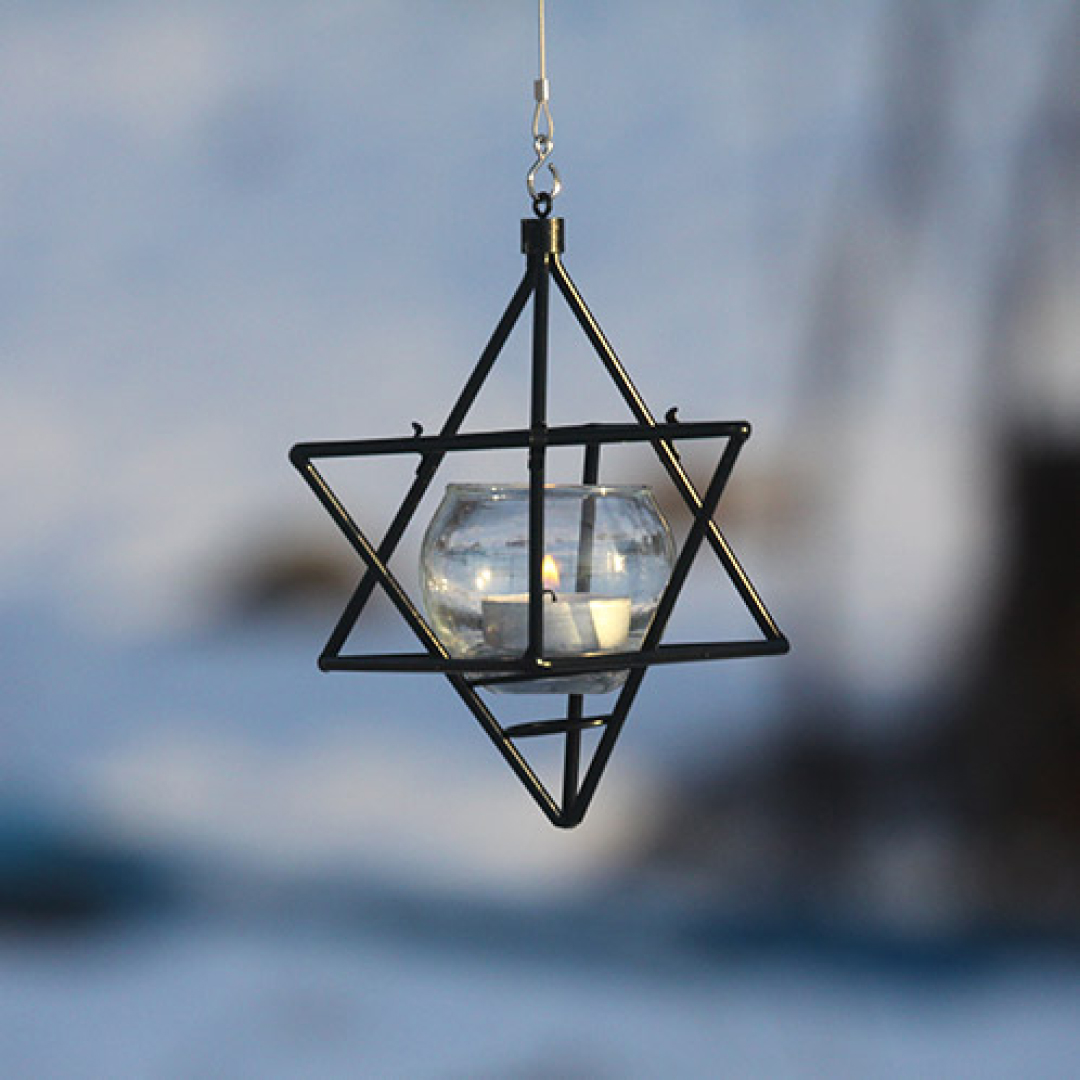
The metal star hangs from a tree and folds flat for shipping. Its box doubles as a shop display, and an optional glass bowl turns the star into a tealight holder.
Research
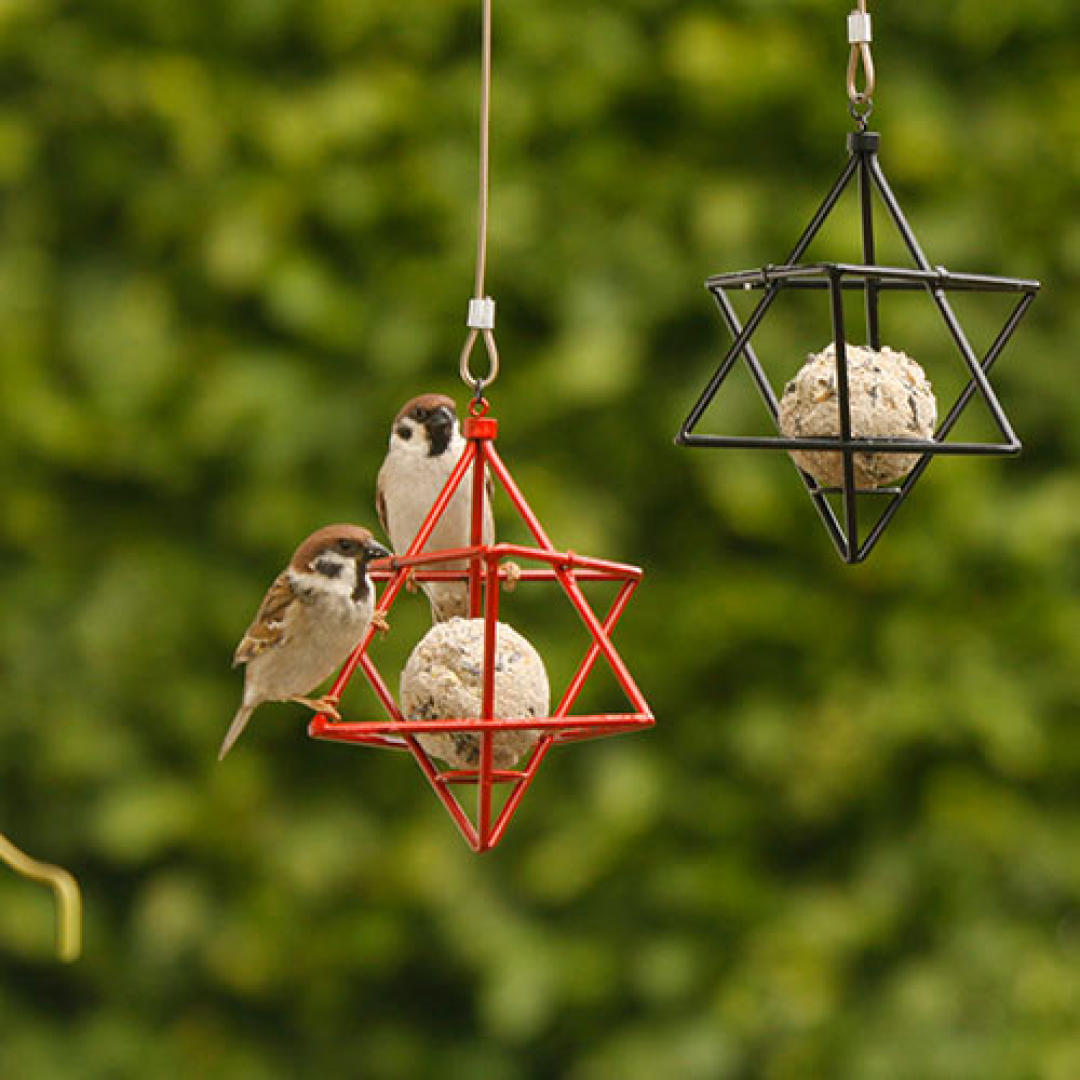
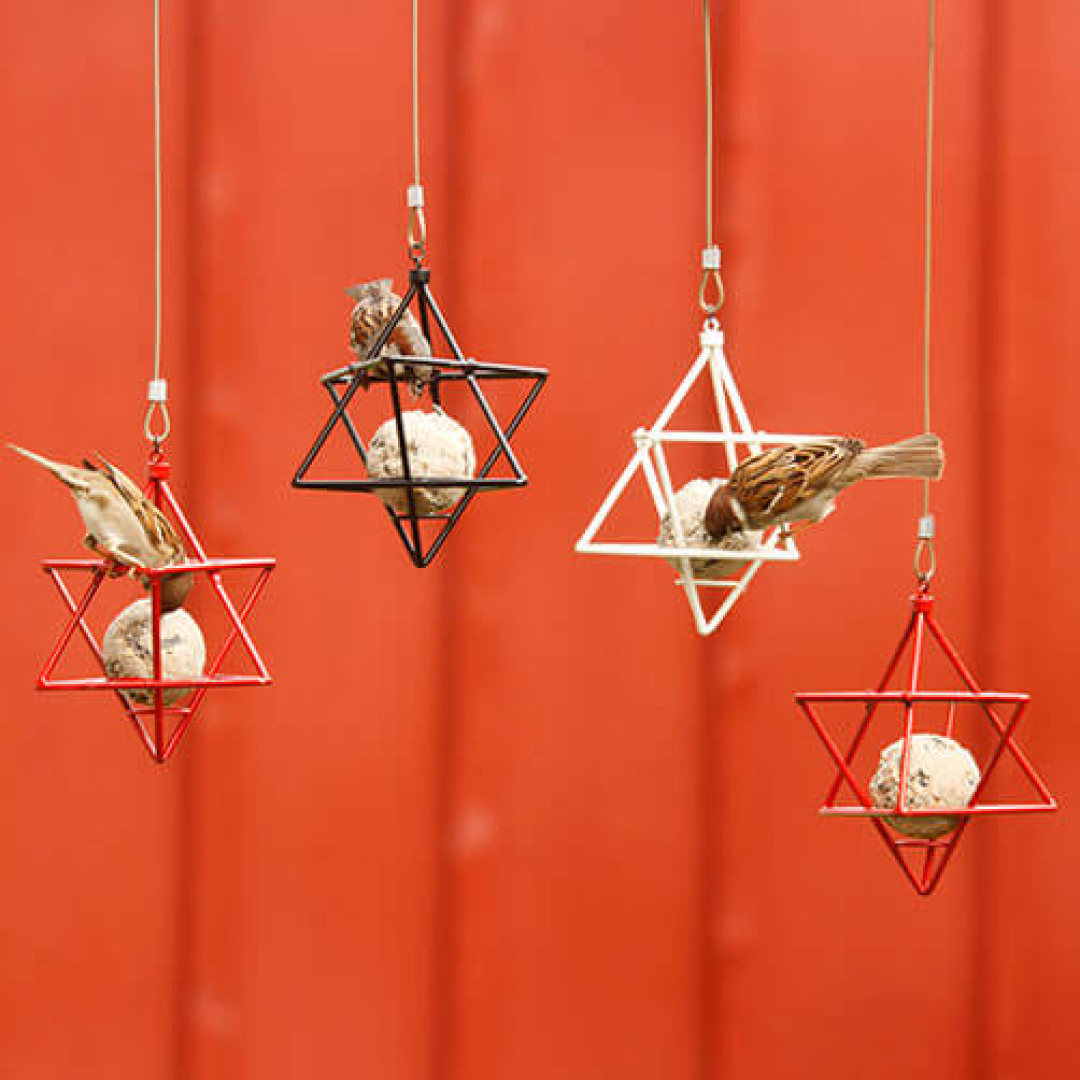
I drew on Wildlife Garden’s in-house knowledge of birds to work out how they would use the feeder. The rings at the bottom help keep birds from getting caught in the frame and hold the suet ball in place as it gets smaller. Production, packaging and shipping also shaped the design.
What I contributed
I sketched and prototyped the star, developed the metal design in Rhino and prepared the technical drawings. I also illustrated the instructions on the box.
The outcome
The Star became one of Wildlife Garden’s best-selling products. It was priced around what you’d pay for a good bottle of wine, making it an easy gift.
What I learned
Testing with birds takes patience. Inexpensive physical prototypes were useful alongside 3D models, and the protective coating mattered for a product that would live outdoors.